Top 10 Philanthropists
01.09
It’s easy to criticize the rich for extravagant lifestyles, especially at a time when so many are facing financial hardships in a suffering economy. However, what often is overlooked or outright ignored are the philanthropic activities that the richest of the rich are involved with. Supporting causes ranging from higher education to the eradication of terminal diseases, the uber-rich pump billions of dollars into charitable causes around the world. Lear jets and lavish mansions aside, wealthy philanthropist provide a sizable portion of the necessary funds that many worthwhile organizations need to operate. The key for big spenders on this list is the immediate impact of their giving endeavors. Here is a top 10 list that is worth its weight in gold, representing some of the worlds leading philanthropists.
10. Richard Branson

Mr. Branson is a businessman who is familiar with challenges. This is the man who started his own airline. His next step has him taking on one of the direst concerns facing the planet – preserving the environment. To fund his ‘green’ endeavors, such as developing reliable green energy, Richard Branson is donating the profits from some of his business holdings (transportation, which generates an estimated $3 billion). His foundation, Virgin Unite, has even offered a $25 million bounty for any practical solution to cleansing the atmosphere. Seeking to produce results, Mr. Branson continually compensates organizations and individuals who develop solutions to fight global warming.
9. Eli and Edythe Broad

Eli Broad made his fortune in the business area. A well respected businessman, Mr. Broad has focused his acumen on philanthropic activities. He and his wife Edythe manage the Broad Foundations (which features several smaller organizations that focus on specific causes). Interestingly, the Broads endeavor to fund worthwhile causes that no one else does – in fact, this is generally a criteria for their interest in a project. This keen approach has resulted in their foundation assisting in areas where an impact at foundational levels is needed – from doctors performing medical research that’s not quite prepared for government grants to funding training for education administrators. The Broads are also a leader in funding genome research.
8. Warren Buffet

One could easily argue that Mr. Buffet could be much higher on this list when one considers the sheer amount of money that he has provided to charitable causes. A highly successful investor, Mr. Buffet has earned billions. Not taking his success for granted, Mr. Buffet has equally invested billions to various philanthropic causes. Most recently, he has pledged almost $38 billion to assist the Bill and Melinda Gates Foundation (whose work we have listed further down). Additionally, Mr. Buffet awarded each of his 3 children about $1 billion a piece to fund their own, individual philanthropic projects.
7. Thomas Siebel

For this list, impact is the name of the game and Thomas Siebel certainly meets this criteria. When Mr. Siebel became aware of the disastrous effects of methamphetamines on individuals and communities in Montana, he leapt into action. Founding The Meth Project, Mr. Siebel invested a sizable portion of his wealth into a public blitz about the dangers of meth addiction. The Meth Project bought thousands (literally) of ad spots – from billboards to television to get the word out. The results speak for themselves. Montana, once listed as one of the highest states with meth abuse, is now one of the lowest. With such resounding success, Mr. Siebel and The Meth Project are carrying their efforts to other states.
6. William Barron Hilton

The Hilton’s, among the richest of the rich, are certainly known for living a very lavish lifestyle. This image (or perhaps because of it) hasn’t prevented William Hilton from doing his part to help others. To this end, William Hilton has pledged an eye-opening 97% of his personal wealth to the Conrad N. Hilton Foundation. This infusion of cash (estimated to be around $2 billion) will allow the foundation to continue to provide shelter for the homeless, offer vocational training to the disadvantaged, and assist disabled children with obtaining needed educational opportunities. The efforts of the Conrad N. Hilton Foundation are international in scope.
5. George Soros

With as much as $6 billion in total donations to date, George Soros has made an impact in a number areas. Our second hedge fund manager, Mr. Soros knows his way around money. Using this talent for more than just realizing profits for his clients, Mr. Soros has channeled his philanthropic efforts towards many of the social issues in eastern and central Europe. His Open Society Institute has invested funds in such diverse areas ranging from college scholarships to economic relief. With a belief that poverty is often the result of poor government, Mr. Soros also assists heavily in pro-democratic endeavors in many former Soviet bloc nations.
4. Chris and Jamie Cooper-Hohn
This husband and wife duo supports the Children’s Investment Fund Foundation. Mr. Cooper-Hohn is best known for his activities as a hedge fund manager. His shrewd business dealings have earned him a somewhat notorious reputation in the business world. Nevertheless, with the assistance of his wife Jamie; Chris has invested a good deal of his earnings into his charitable foundation. So much so, that the Children’s Foundation boasts of $2.5 billion in assets. Targeting some of the poorest areas of the world (i.e. Africa and the India sub-continent) the Cooper-Hahn’s seek to improve the lives of children. The Children’s Foundation endeavors to have an immediate impact in its endeavors and therefore focuses on areas such as the alleviation of hunger, reproductive health services and the like.
3. Bill and Hillary Clinton

It’s not unusual for former American presidents to be socially active. Such is the case of the next member on our list, former president Bill Clinton. Through his (and wife, Secretary of State Hilary Clinton) William J. Clinton Foundation, the president has been able to channel his own wealth and visibility into a number of worthwhile initiatives. The Clinton Foundation has worked around the world to provide educational opportunities to children (over 10 million), clean drinking water to some of the poorest regions (impacting over 12 million), and working for a cleaner environment (aiding in the reduction of millions of tons of CO2 emissions.
2. Donna and Philip Berber

In terms of impact, there are few that have had as a direct impact as the next entry on our list of Donna and Philip Berber. Philip Berber made millions with his online trading company, CyberCorp and even more once he sold it to Charles Schwab. Apparently, this provided Mr. Berber more time to focus on his charitable activities through his foundation ‘A Glimmer of Hope’. A Glimmer of Hope Foundation focuses on one of the poorest nations of the world: Ethiopia. And the work they have done has had an immediate and needed impact on the lives of millions of people. To date, the work of the Berber’s foundation has resulted in thousands of wells for water being dug, several hundred schools constructed, and much needed microloans granted.
1. Bill and Melinda Gates

The name Microsoft invokes all kinds of emotions in people, and not all of the feelings are good. Nevertheless, whatever one may think about the business practices of Microsoft co-founder Bill Gates, few can fault his philanthropic activities. Teaming with his wife Melinda Gates, the Bill and Melinda Gates Foundation has proved to be a charitable giant. With over $34 billion in assets, the foundation funds initiatives around the world. Ranging from educational grants to medical research – the Bill and Melinda Gates Foundation seeks to assist the people of the world lead improved lives. Mr. and Mrs. Gates donated their entire 2009 dividends from Microsoft stock to their foundation (a whopping $3 billion)!
Source: Top Tenz
Top 10 Multi-Sport Athletes
01.07
In today’s ultra-competitive world of professional athletics, it’s extremely difficult to go pro. Still, there have been a number of physically gifted, insanely versatile athletes who’ve managed to make a name for themselves in multiple, often surprisingly different, competitions. In many cases, these “multi-sport” athletes have managed to rise to the top of the class in more than one sport simultaneously, cementing their reputations as some of the best all-around athletes in history. Here are ten of the most famous examples:
10. Brian Jordan

Baseball and football seems to be one of the most popular two-sport combinations for these athletes, and Brian Jordan is a classic example. After shining on both the diamond and the gridiron throughout high school and college, he began a career in the late 1980’s as both an outfielder for the St. Louis Cardinals and a safety for the Buffalo Bills. Despite his obvious versatility, it’s widely agreed that Jordan was always a better baseball player than he was a football defensive back (he was cut from the Bills’ training camp during his first NFL season), and after only a few years in the NFL, he left the game to pursue baseball full time. Once he narrowed his focus to just one sport, Jordan quickly became a big-time asset to his team, batting nearly .300 and hitting an impressive 22 home runs in 1995. His later career would see him become a journeyman of sorts, playing for the Atlanta Braves on two different occasions (with whom he earned an All-Star Game appearance), as well as for the Rangers and the Dodgers.
Most Impressive Achievement:
Jordan may have become known more as a baseball slugger in his later years, but for a brief period he was one of very few athletes to have ever played both football and baseball simultaneously. After leaving the Bills in the late eighties, Jordan signed with Atlanta, where he played as a defensive back. During his brief stint as a Falcon, he recorded 5 interceptions and 2 safeties, all while also serving as an outfielder for the St. Louis Cardinals.
9. Lottie Dod

Easily one of the most versatile female competitors from the early days of organized sports, Lottie Dod was a British athlete who excelled at tennis, golf, archery, and field hockey. She is most famous for her skill at tennis, which saw her win the ladies’ singles championship at Wimbledon five times in the span of seven years, the earliest at age 15. If that’s not impressive enough, it’s worth noting that she didn’t even bother to play the two years she didn’t win, and only lost 5 total times in her entire tennis career. After leaving competitive tennis behind, Dod moved on to field hockey, which she helped pioneer by starting the women’s team from Spital, England. She quickly became the team’s captain, and was known for being the deciding factor in whether or not they succeeded. This rule was also proved true when Dod was selected as a member of the English national team, where she scored both goals in a 2-1 win over Ireland.
Most Impressive Achievement:
Dod is most remembered as a tennis and field hockey player, but she was equally accomplished in golf and archery. In 1904, she won the national championships at golf, and after taking up archery, she secured a silver medal in the 1908 Olympic games.
8. Charlie Ward

Commonly regarded as one of the best all-around athletes in the history of sports, Charlie Ward was a skilled player in football, baseball, and basketball. As a quarterback at Florida State University, he led his team to a National Championship, and along the way he managed to also win the Heisman trophy by one of the biggest margins in history. He was also on the school’s basketball team, and was even said to be an accomplished tennis player. Upon graduating, Ward was faced with a tough decision, as teams in both the NFL and the NBA were expected to draft him. In a surprise move, Ward eventually chose the NBA, where the New York Knicks drafted him. He soon distinguished himself as a reliable point guard and skilled 3-point shooter, even as the NFL continued to knock on his door (according to reports, Ward was courted by the Kansas City Chiefs as a possible backup quarterback for Joe Montana). Nagging injuries eventually led to Ward’s early retirement from professional sports, but his college career alone would be enough to qualify him as one of the most accomplished multi-sport athletes in recent memory.
Most Impressive Achievement:
Ward’s college sports career was so impressive that in addition to being courted by the NFL and drafted by the NBA, he was also drafted by major league baseball teams twice, in 1993 and 1994. This was not because of any significant accomplishments in baseball—Ward hadn’t even played on his college team—it was just that he had such a good throwing arm that managers always believed they could turn him into a big-league pitcher.
7. C.B. Fry

Englishman Charles Burgess, or C.B., Fry was one of the most accomplished renaissance men of his time: excelling as a teacher, writer, publisher, and politician. Today, though, he is most remembered for his athletic achievements, which saw him become one of Europe’s most famous sportsmen with his uncanny skill at everything from cricket and track and field to soccer, rugby, and gymnastics. Cricket was Fry’s main game, and he was known for having one of the most consistently high averages in both the league and international play. He retired with over 30,000 career runs, which at the time was one of the all time highest totals. In soccer, Fry was also formidable, playing on both the pro side Southampton and the English national team as a defender.
Most Impressive Achievement:
Fry’s successes as a track and field star are perhaps the most convincing proof of his legendary abilities as an all-around athlete. He was best known for his skill in the long jump, and in 1893 he managed to tie the world record with a leap of over 23 1/2 feet. Fry was also an accomplished sprinter, and is known for winning the 100-yard dash during the world’s first international track meet between Oxford and Yale universities.
6. Lionel Conacher

The most famous of Canada’s athletes, Lionel Conacher was a sportsman from the 1920’s. Primarily known as a hockey player, he was also known to compete professionally in football, baseball, lacrosse, boxing and wrestling. He started as one of the earliest stars of Canadian football while playing for the Toronto Argonauts, with whom he won the league championship in 1921. Conacher, who was known as “the Big Train,” was a standout player in his early days, and on one occasion he was said to have rushed for an amazing 215 yards on only eight carries. After traveling to the U.S., Conacher tried to bring pro football to Canada (which was amateur-only), and in 1933 he organized the first ever official league while simultaneously serving as the captain of two teams. By this time he was a professional in as many as four sports including baseball, lacrosse, and wrestling; but it was when he took up hockey that he truly became a star. Hockey was supposedly his weakest sport and the one in which he had the least interest, but Conacher still shined, leading more than one team to a Stanley Cup victory before he retired in the late 30’s.
Most Impressive Achievement:
In addition to his accomplishments as a pro athlete (which include never losing a single match as a pro wrestler), Conacher is also remembered for the sheer volume of sports that he managed to play simultaneously. One famous story from 1920 describes him as having hit the game-winning home run in a baseball game, only to catch a ride across town to play lacrosse, where he quickly scored four goals.
5. Deion Sanders
Famed two-sport star Deion Sanders is perhaps the most high profile of the athletes on this list, and for good reason: not only did he excel at both baseball and football, but he consistently played on quality, championship-caliber teams in both leagues. “Neon Deion” is remembered primarily for playing two sports, but in college he was even more versatile, and ran track in addition to starring on the baseball and football teams. One story describes him as playing a baseball doubleheader, running at a track meet, and then returning to play another baseball game all in the span of a day. After college, Sanders was drafted by the MLB’s New York Yankees and the NFL’s Atlanta Falcons, and decided to play for both. Unlike many athletes that pull off two pro sports careers, Sanders managed to keep competing in both leagues for a surprisingly long period of time, serving as an MLB outfielder and base-stealing expert from 1989 to 1995 (and on and off thereafter), as well as playing as a cornerback and kick returner in the NFL from 1989 to 2001. Along the way, he managed to notch an impressive 53 career interceptions as one of football’s most feared defenders, while also recording 186 career stolen bases in baseball.
Most Impressive Achievement:
There’s an ongoing argument over whether Sanders would have been a better player if he had just concentrated on one sport, but even when dividing his time, his achievements were nothing to scoff at. Not only is he the only man to compete in both the Super Bowl and the World Series, but he’s also the only athlete to ever hit a homerun and score a touchdown in the same week.
4. Jackie Robinson

Jackie Robinson is already an icon for being the first man to break the color barrier in professional baseball in 1947, but what is often forgotten in the process is just how amazing of an athlete he really was. From an early age, he was a sports virtuoso, taking on every game that could be played and competing at a high level in all of them. In high school, Robinson played on the varsity team in multiple sports, and was a letterman in football, baseball, track, and basketball. His career really took off when he began attending UCLA, where he continued to be a standout in multiple sports (ironically, baseball was regarded as his weakest game). After college, he began playing semi-pro football as a member of the Honolulu Bears, and later served as the running back for the Los Angeles Bulldogs in the short-lived Pacific Coast Football League. Robinson finally began playing professional baseball in 1945, when he joined the Kansas City Monarchs, and it was here that he got his shot at Major League Baseball when he was selected by Dodgers manager Branch Rickey to be the first black player in the all-white leagues. As if this wasn’t a big enough accomplishment, Robinson would continue to shine after breaking the color barrier. He earned a reputation for stealing bases, once getting 37 in one season, and won the MVP award in 1949.
Most Impressive Accomplishment:
Robinson’s world-changing move into pro baseball is certainly his most important contribution to sports, but from a purely athletic standpoint, his biggest achievement might have come in college. While at UCLA, he managed to letter in four sports (football, track, baseball, and basketball), a feat that has never been equaled.
3. Bo Jackson
Bo Jackson could easily have become the greatest multi-sport athlete of all time had a hip injury not prematurely ended his sports career, but even in the short time in which he played, he distinguished himself as one of the most formidable sportsman in recent memory. Jackson was a standout player in both football and baseball in his teens, to the point that the New York Yankees drafted him as soon as he graduated high school. He elected to go on to college at Auburn University, where he continued to dominate as a home run hitter and unstoppable running back, and in 1985 he was awarded the Heisman Trophy. He was selected first in the NFL draft, but continued to play baseball as well, simultaneously serving as a running back for the Oakland Raiders (then the L.A. Raiders) and as an outfielder for the Kansas City Royals. He became known as a big time slugger in the MLB, hitting 141 home runs over his eight-year career, while at the same time rushing for over 2,000 career yards in the NFL, including a record-breaking 221 yards in a Monday Night game.
Most Impressive Achievement:
It’s hard to say what Jackson might have accomplished had he not gotten hurt, but many claim he would’ve been one of the all time greats, and he did succeed in becoming the first athlete to ever play in both the NFL Pro Bowl and the MLB all-star game. Amazingly, after retiring from the MLB and the NFL, Jackson even tried his hand at basketball, briefly playing for a semi-pro team in L.A.
2. Jim Brown

Former NFL running back Jim Brown is commonly regarded as a contender for the title of greatest football player of all time, but what is not widely known is that he’s a running contender for the title of greatest lacrosse player of all time, as well. In fact, in his early days at high school, Brown managed to rise to the top of the ranks at nearly every sport he took up, from football and lacrosse to basketball, baseball, and track. He carried most of these interests over to college at Syracuse University, where he continued to build a name for himself as an excellent all-around athlete. In football, he managed to rush for nearly 1,000 yards in only eight games in order to score an amazing per-carry average of 6.2 yards. Meanwhile, in lacrosse he ended his senior season with 43 goals in 10 games, and was listed as a first team All-American.
Most Impressive Achievement:
If Brown’s college career was not amazing enough, his professional career in the NFL was downright legendary. After being drafted by the Cleveland Browns in 1956, Brown proceeded to break every major record in the book, including the record for career rush yards (12,312 yards), touchdowns (106), and all-purpose yards (15,549). Many of Brown’s records have been broken since his retirement in 1965, but he still remains the only NFL running back to have ever averaged more than 100 yards a game for his career.
1. Jim Thorpe

For sheer athletic skill and versatility, early twentieth century multi-sport phenomenon Jim Thorpe simply has no equal. No other athlete since has managed to play so many different sports in so many different roles, and none has managed to do them all so well. Born in 1888, Thorpe was of Native American descent, and spent most of his early years in Oklahoma before going to school in Pennsylvania, where he was coached by legendary football whiz Pop Warner. It was here that he first began to display his athletic prowess, playing nearly every sport including baseball, lacrosse, track and field, and even ballroom dancing. After college, Thorpe pursued a professional sports career while training for the 1912 Olympic games, which were held in Sweden. He competed in multiple events in track and field, and, thanks to his ability to perform well in any event, easily won gold medals in the pentathlon and the decathlon. Thorpe used the fame he garnered from the Olympics to charge headlong into professional sports. He joined the New York Giants baseball team, and would later play for both the Brewers and the White Sox. At the same time, he was playing professional football for the Canton Bulldogs, one of the first pro teams in the league that would later become the NFL. Unbelievably, throughout it all Thorpe also played pro basketball as part of a traveling exhibition team made entirely of Native Americans.
Most Impressive Achievement:
Perhaps the most amazing thing about Thorpe is not the number of different sports he played, but his versatility within those individual competitions. Thorpe could always play on both sides of the ball, particularly in football, where he served as his team’s running back, defensive back, punter, and kicker. One legendary story tells of his college team defeating Harvard 18 to 15 in a game in which Thorpe scored every one of his side’s points. Yet another tells of how when he had a 95-yard touchdown revoked because of a penalty, Thorpe simply shook it off and scored a 97-yard touchdown on the very next play.
Source: Top Tenz
10 Interesting Facts About St. Patrick’s Day
01.04
Ahh, St. Patrick’s Day: the day when each one of your friends and even your grandfather seems to be Irish. This is probably the only day when you’ll dig through your closet, just to find that special green something to wear wherever you go. St. Patrick’s Day is celebrated all over the world, and for many, it’s a day to relax and drink, whether it’s Guinness or just some random green beer served at the bar. Many think St. Patrick’s Day is just about wearing green, drinking, and dealing with the hangover the next day. However, there are probably some things that many don’t know about St. Patrick’s Day.
Below is a list of ten things that you may not have known about the special day celebrated on March 17 of each year. Some of these facts you’ll find surprising, while others are a little bit more expected, especially if you’ve participated in a St. Patrick’s Day festivity once in your live. And of course, Happy St. Patrick’s Day!
10. Shamrocks
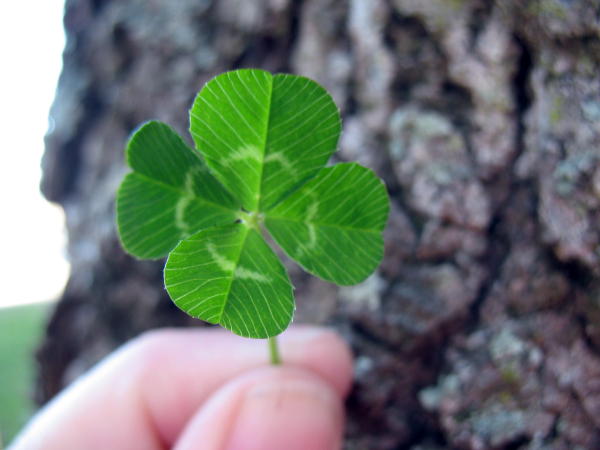
Of course with St. Patrick’s Day comes the massive appearance of shamrocks. Whether you’re wearing one pinned to your lapel or you have them on your socks, shamrocks have definitely become a central symbol for this day. In the olden days in Ireland, the shamrock was seen as sacred. Due to its green color and overall shape, many believed it to represent rebirth and life. The four leaves of the clover represent faith, love, hope, and of course, luck. Because of this, the shamrock has continued to be very popular in the Irish culture. When the Irish were under control of the English, many silent protests were held, and each person would wear a shamrock pinned to their shirt. From then on the shamrock has became a very well-known symbol that represents Ireland and the Irish people.
9. Prohibition in Ireland…Really

When you think of March 17, you almost surely will think of beer, and when you think of someone Irish, you probably think of beer and pubs as well. But, in the history of Ireland, beer wasn’t always a given on this widely-celebrated day. in 1903, a member of the Irish parliament, James O’Mara introduced a new bill that called to recognize St. Patrick’s Day as a religious observation in Ireland. However, because this was made a law, this meant that all of the local pubs had to close; therefore, no beer was readily available. So for 67 years, the Irish suffered through a total shut down of all pubs until 1970 when the law was overturned and the holiday was no longer a religious observance, but a national holiday.
8. Only Three Locations Truly Care
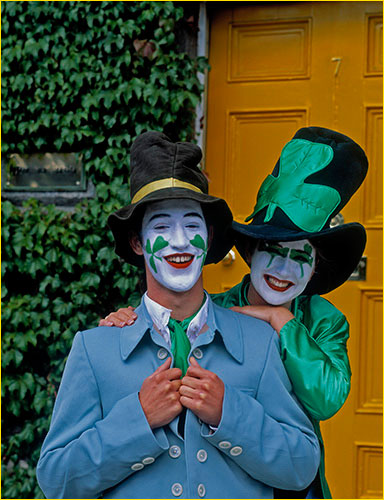
While many places all over the world celebrate St. Patrick’s Day, from the U.S. to Australia to Argentina and South Korea, only a very select few locations have actually made this day a public holiday for everyone. First, the very tiny island sometimes known as “Emerald Island of the Caribbean,” Montserrat, is one of three countries that publicly celebrate the holiday. This is due to the high number of Irish refugees that came from Nevis and St. Kitts to the island. So to commemorate them, the holiday is celebrated. The holiday is also considered to be a public one in Newfoundland and Labrador. Here the holiday is celebrated to remember a failed slave uprising that occurred in 1798. And of course, last but not least, Ireland has made March 17 a public holiday as well.
7. Yes, Hallmark Makes Some Money Too
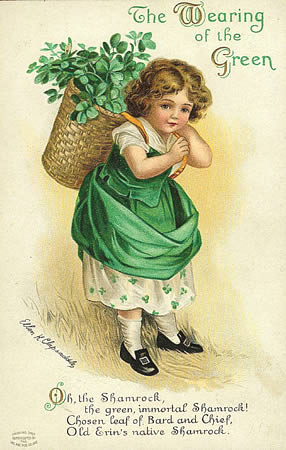
We all know about Hallmark and their greetings that are perfect for some of the most prized holidays such as Christmas, Mother’s Day, and even Valentine’s Day. If you’ve ever given someone a card, or received a card yourself, you’ve probably opened one that was closed by Hallmark’s famous gold seal. Though it seems crazy, on St. Patrick’s Day, Hallmark usually sells anywhere from 8-15 million St. Patrick’s Day cards each year. But, offering these cards to the public isn’t anything new for Hallmark. According to their website, the company has been offering these green cards since the early 1920s, and there is always a wide selection to choose from, usually between 100-150 cards each year.
6. So does McDonalds

If you’ve ever taken a look at McDonald’s “dessert” menu, to put it lightly, you’ve surely seen the pies, ice cream, cookies, and probably even one of those fruit parfaits. You’ve probably also noticed the varying milkshakes that McDonald’s offers, especially during certain holidays and seasons. Usually around the end of February or beginning of March, McDonalds offers its Shamrock Shake. Of course the milkshake is nothing but a green color that tastes like mint. First served in 1970, the shake had become very popular in the U.S., Canada, and Ireland but today is mostly popular in the U.S. Prices of the shake have about doubled in the last decade, and new additions are often added. Recently, McDonalds has served the shakes with whipped cream topped with a cherry.
5. Evacuation Day
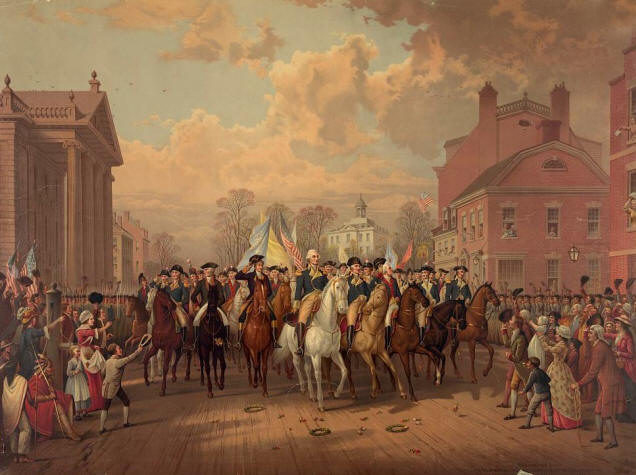
With every event that occurs, there’s usually some sort of coincidence to it, and St. Patrick’s Day is no exception. In a few counties in Massachusetts, the state with the largest amount Irish population (about one-fourth), there is a celebration of a day known as Evacuation Day. Mainly the day is celebrated in Somerville, Cambridge, and Suffolk County. While Boston is already well known for its celebration of St. Patrick’s Day, Evacuation Day is important as well. Coincidentally the holiday falls on March 17, but it does commemorate a very special event in Irish history. On March 17, 1776, the British forces left Boston after troops headed by Henry Knox and George Washington placed heavy artillery around the city. To celebrate this significant event, counties in Massachusetts made the day a holiday in 1901. However, the holiday is usually under heavy fire, as some see it as a waste of money, as workers are paid for a day off.
4. Snakes in an Ocean
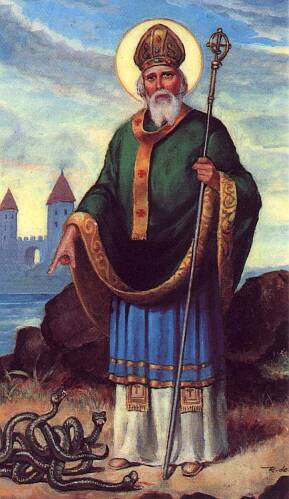
We’ve all heard one Irish folklore story or another, especially those centered on St. Patrick. One very popular story is that St. Patrick was able to chase all of the snakes out of Ireland where they then drowned in the ocean. However, when it comes down to it, St. Patrick didn’t chase any snakes out of anywhere, nor can you take folklore literally. In all reality, there has never been any record of snakes living anywhere near the Emerald Isle. Instead, figurative language was often used in these folklores, and in this case, the serpents more than likely represented druid and pagan religions that slowly disappeared from Ireland over a period of centuries after St. Patrick is said to have placed the seeds of Christianity there.
3. New York Has More Irish Pride
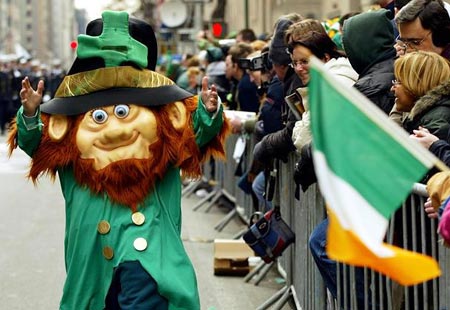
With a holiday all about the Irish, you’d probably think that the biggest and most widely known celebrations come from nowhere else but Ireland. However, as history shows, Ireland isn’t the country that tops the list with Irish pride, at least not when it comes to celebration and festivities. After decades of studying, no one has found the exact time when St. Patrick’s Day was first widely celebrated. The first known depiction of the holiday comes from a man named Jonathan Swift, who mentions a 1713 celebration taking place in London. The only thing mentioned is a day where Westminster Parliament was given a holiday and that buildings were decorated in green. In 1762 in New York City, the first parade honoring this holiday took place. Today it stands as the largest celebration and parade in the U.S. Almost 3 million people come to see the parade, with contains over 150,000 people that span a mile and a half long.
2. Green or Blue?
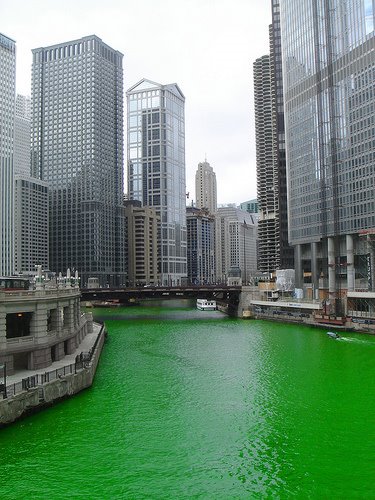
Though green is a very popular color on St. Patrick’s Day, the original color that was very popular and often related back to St. Patrick was not green, but blue. However, in today’s world, if you’re without an ounce of green, expect a pinch! In Irish folklore, green is known as being worn by immortals and fairies, and often signified new life and crop growth. Some even say that wearing green is considered to be unlucky as it is known to represent a time in Irish history when Ireland was not a free country. Blue came into the picture long ago when the military men wore “St. Patrick’s Blue” in their uniforms. The blue is also represented during the time when Henry VIII was declared King of Ireland and the flag used was a gold harp on a blue background. But today, green is the prominently known and worn color. In Chicago, the Chicago River is dyed green using 40 pounds of green vegetable dye.
1. St. Patrick Wasn’t Irish
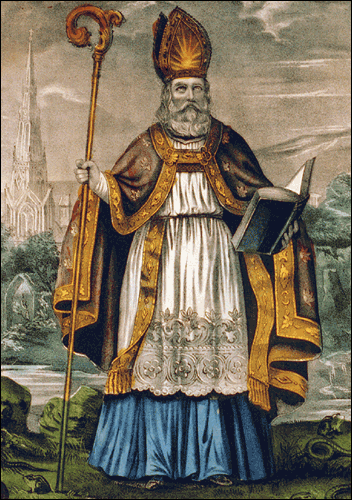
Because St. Patrick’s Day is so popular in Ireland, and all you really ever hear about on the date is Irish this Irish that, you probably just assume that St. Patrick is well…Irish. However, your assumption would be wrong. St. Patrick was actually Scottish and was said to be either born in Scotland or Wales. Even more shocking is that his name wasn’t even Patrick. His birth name is actually Maewyn Succat. However, at the age of 16, he was kidnapped and sold into Irish slavery. Later on in time he became a priest under bishop of Auxerre and took on the name Patricius, better known as Patrick. Here he felt that this was his calling to being Christianity and Ireland closer together. In any case, the Scottish should get some recognition on this day as well.
Source: Top Tenz
Top 10 Terrible Inventions
01.02
10. In-Vehicle Rear-Flushing Spittoon
Inventor: Dan L. Fain (U.S.)

Practical as this may sound, not as many people chew tobacco or spit snot out of their car windows as you may guess. Fain’s imaginative idea of hooking up a spittoon to the windshield washer fluid motor may have sounded like an award-winner to the Copenhagen Man, but to just about everyone else in the United States it made little, if any, sense. How often does the average human being have to spit out of his or her vehicle? Granted, there are obvious exceptions to this rule, but there are also so few exceptions that this invention never really, how should we say it… took off.
Unfortunately for Mr. Fain, the price tag on his invention was just a little too high for its inherent value. Yes, even for the Copenhagen Man. We advise that you simply roll down the window or open the door at a light. Or, if you’re an avid chewer or dipper, carry a Styrofoam cup. It’s easier than you think. Image: freepatentsonline.com
9. “Small Sacrifices” Glider
Inventor: Otto Lilienthal (Germany)

Aptly nicknamed “the Glider King” by some of his peers and fans, inventor Otto Lilienthal if famous for developing and testing numerous gliders and other attempted flying devices. Lilienthal moved to Austria in his early years in order to try out his various glider designs on the Alps. After being interrupted by the Franco-Prussian War, in which he served voluntarily, Lilienthal returned to Austria where he started a business building steam engines and continued his pursuit for the dream of flight.
His last days were spent putting the finishing touches on what would prove to be his final glider design. After taking the plunge from a 17 meter manmade hill, Lilienthal experienced unexpected technical difficulties with his craft and plummeted into the soil. He broke his spine and died in Berlin the following day. Among his last words were, “small sacrifices must be made.”
The Wright Brothers are quoted as regarding Lilienthal’s findings as highly important to the developing field of aviation.
8. Bird Trap and Cat Feeder
Inventor: Leo O. Voelker (U.S.)

While pictures of this device are disturbing at best, the invention was registered with the U.S. Patent Office and was granted permission to be patented. The device is exactly what it says it is: a bird trap that catches birds and forces them into a thin cage, through which the family cat may claw and kill (and perhaps consume) the animal.
Interesting. Disturbing. Never produced in mass quantities. Image: freepatentsonline.com
7. Razr Phone
Inventor: Motorola (U.S.)

Despite it’s name, Motorola’s Razr cell phone (also known as the MotoRazr) did not, well, shave. At all. Somehow, between the marketing, designing, and translation projects, somebody forgot to actually use the device. Following countless reports to the company about the Razr’s consistent failure to accomplish virtually any level of neatness, the company was forced to reevaluate the product’s status on the market. Following this failure, David Beckham’s heavily endorsed product, the Rong Zun 758 Mobile Razor has taken the place of the late, great Moto Razr and is having slightly better results.
Just shave at home, boys. It’s cheaper, cleaner, and won’t eat up your cell battery.
6. Motor Powered Roller Skates
Inventor: Unknown (China)
Made in China and brought into the U.S. via Amsterdam, these skates were sold mostly on street corners and over the Internet. They were not incredibly pricey, but they were incredibly dangerous. The skates had a handheld throttle device, and would reach 20mph in under 20 seconds. Although no proper brakes were affixed to the skates, an “emergency stop” button allowed for the user to lock the wheels, almost always resulting in a horrific 20mph accident.
It’s no mystery why these babies aren’t available at your local Toys ‘R Us.
5. Passenger Seat Fuel Tank
Inventor: Kenneth E. Brock (U.S.)

Mr. Brock, an attorney by trade, suspected that by creating a fuel tank in the shape of a passenger seat, an airplane could achieve greater flight distances. At first the invention seemed marvelous, but upon further research (allowing other people to hear his idea), he discovered that potential passengers of these “seat tank” planes were mortified that an entire canister of fuel could be in the seat in front, behind, or beneath them. With no shield to guard against explosion or leakage into the main compartment of the aircraft, the idea was eventually disbanded and left for others to pursue a more stable and logical means of increasing the range of civilian aircraft.
It appears that Brock, following the EAA’s lack of interest in endorsing the design, attempted to create a passenger seat fuel tank for use in sports cars and other vehicles. Not surprisingly, the potential passengers in these vehicles had the same response. “What happens if we get into an accident? Won’t the tank explode all over me?” Brock had little success in answering this question, and his 1971 Passenger Seat Fuel Tank mission fizzled out into a failed dream.
4. Smile Scanner
Inventor: Keihin Electric Express Railway (Japan)

Don’t be fooled by their cheery, personable faces: the Keihin Railway workers operating their stations may be far from happy. Their bared teeth and upwardly curving dimples are mandatory and cameras and computer software designed to detect and critique the “cheerfulness” of their smiles are monitoring them.
Many folks thought that the mechanization of the human race would stop with bionic arms and legs. It is plain to see that these people spoke too soon. These newly invented machines have now infiltrated our mood zones, arresting the human freedom to display an “improper” emotion.
This is wrong on so many levels.
3. TNT
Inventor: Joseph Wilbrand (Germany)

Originally intended for use as a yellow dye, Wilbrand created the first batch of trinitrotoluene (the explosive commonly known as TNT) in 1863. This seemingly innocent yellow dye sat on the table for roughly 40 years until the early 1900s, when laboratory scientists realized its efficiency as an explosive. Trinitrotoluene was researched, tested, and in action for WWI and WWII.
TNT is used for both constructive (leveling old buildings to create new ones) and deconstructive (war, terrorism) purposes. The reason for its inclusion in this list has to do with the unfortunate misconceptions of Mr. Wilbrand, who failed to realize that his yellow dye, while only mildly successful at coloring German flags, could have earned him a princely sum from the many militaries of the world who were, at the time, employing the usage of comparatively primitive explosives.
2. The “Best” Morning Sickness and Sleeping Pill (Thalidomide)
Inventor: Grunenthal Pharmaceutical Company (Germany)

Developed as a cure for “morning sickness” in 1944, Thalidomide was rumored to be the “best” cure for insomnia, coughing fits, and headaches. The drug has since been described by many as one of the worst medical blunders in the history of the world. After being prescribed to countless pregnant women in the late 1950s, severe birth defects resulted, affecting upwards of 20,000 newborn children.
Despite its propensity to causing horrific birth defects, Thalomide is still used on primates and other furry creatures, for which it carries no negative side effects. The drug, which has held many titles and boasted many capabilities, was originally developed as an antidote to Sarin gas.
1. Chlorofluorocarbons (CFCs)
Inventor: Thomas Midgley, Jr. (U.S.)

Thomas Midgley, originally a mechanical engineer, developed the gasoline additive tetra-ethyl lead. This advancement led to the immediate production of chlorofluorocarbons, the “anti-atmosphere” molecule that threatens to wipe oxygen off the face of the Earth. At the time, his discovery was readily applauded. However, now we know that the compounds released by gasoline engines designed to turn oxygen atoms into chlorofluorocarbons may very well lead to the total depletion of the ozone layer.
It has been said that Thomas Midgley, who holds dozens of patents to his name, has adversely impacted the atmosphere more than any single organism in the history of our planet.
by Jesse Stretch
Top 10 Most Famous Micronations
01.00
Note: Measurements have been converted to square miles (from acres, square kilometers, and meters) to make comparisons easier.
10. Ladonia

Size: .386 of a square mile
In 1980, Swedish artist Lars Vilks built a series of wood and stone sculptures on the beach of the Kullaberg nature preserve in Skane, Sweden. The artworks, which look like strange whimsical castles, eventually became a popular tourist attraction. They also drew the ire of the local city council, which decreed that Vilks had illegally built a “house” in a nature preserve and demanded the pieces be removed. Not willing to see his art destroyed, Vilks did what any reasonable person would do: he declared the stretch of beach to be an independent, sovereign nation free from the laws and rules of the Swedish government. Vilks named his new country the Kingdom of Ladonia, and quickly came up with a flag and a manifesto that said that his nation’s only tax policy was that citizens should “give away their creativity.”
By the 2000s, Vicks’s country had built up an unofficial population of 14,000—unofficial because none of them actually lived there—made up mostly of fellow artists and other supporters of his cause. It also claimed to have a currency (called the Ortug) and a national language (phrased Latin), and there was even a set series of social classes. Still, even today the fledgling country has yet to impress Sweden, which has never recognized it as a legitimate nation.
9. The Kingdom of Redonda
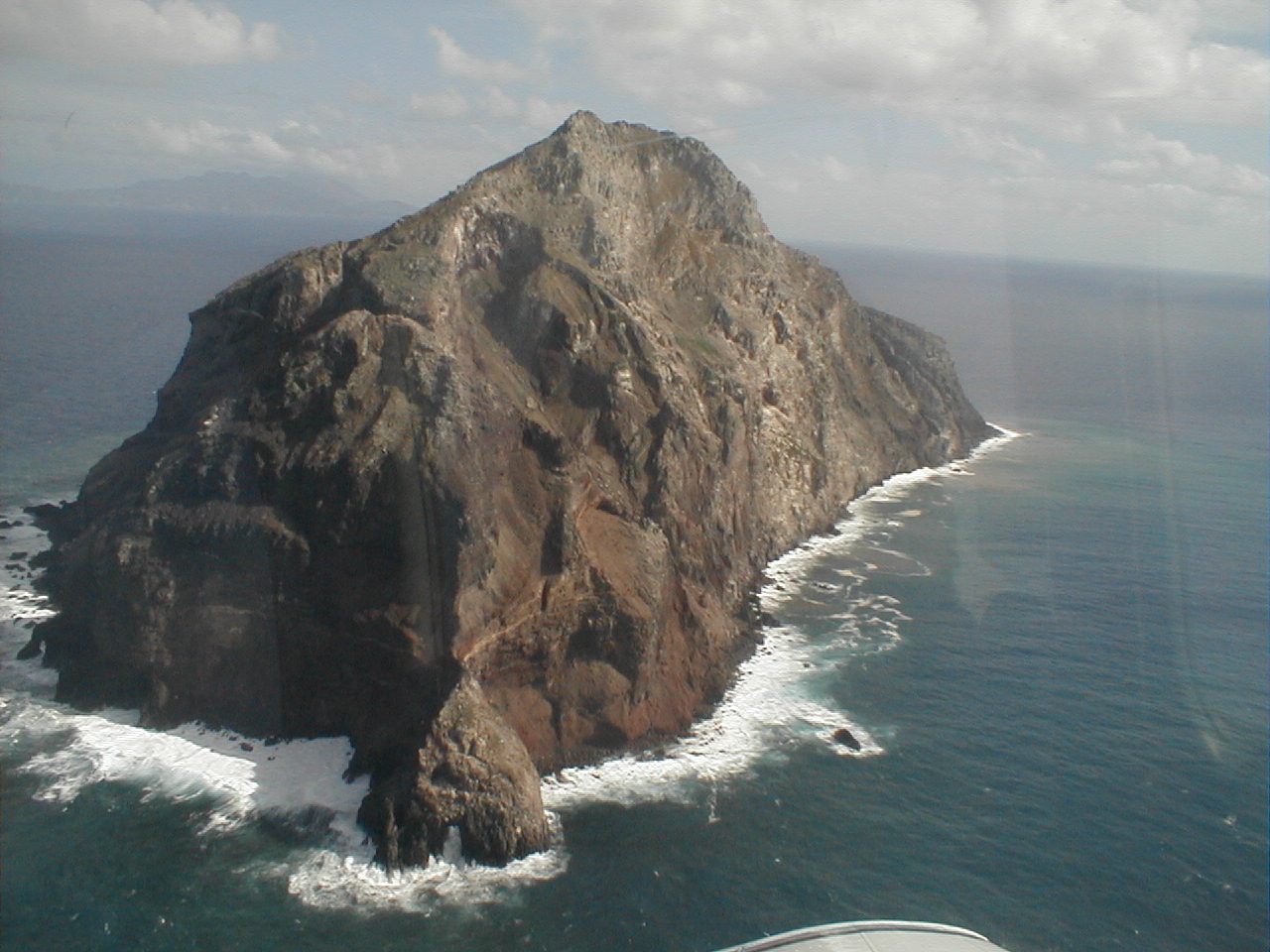
Size: .78 of a square mile
The back-story on the Kingdom of Redonda has been built up over the years by a number of artists and novelists, so its history is more than likely a mixture of fact and fiction. But as the story goes, in the 1800s Matthew D. Shiell, a resident of the Caribbean Island of Montserrat, made a claim on the rocky and uninhabited island of Redonda. The island is almost totally desolate, so Sheill never lived there, but he did serve as “King” from a distance and passed the crown on to his son M.P. Sheill in 1880. According to legend, Sheill even wrote to England’s Queen Victoria and requested that she recognize him as King of the island, to which she replied that she would, as long as he never rebelled against the crown.
M.P. Sheill later became a famous writer, and it was he who first told the story of Redonda and established most of its customs, including the flag and the style of government (absolute monarchy). He then passed the crown on to his friend John Gawsworth, who went by the name King Juan I. Since then, the crown and its power over Redonda’s 100 “citizens” have passed through a number of hands, and today there are as many as three would-be kings claiming the thrown. Perhaps the most famous of these is the Spanish writer Javier Marias. He has given out ceremonial titles in the Redondan kingdom to a number of artists, among them Francis Ford Coppola, Ray Bradbury, and Alice Munro.
8. The Republic of Minerva
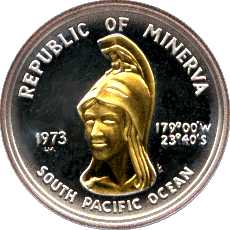
Size: 4 square miles
Micronations are often formed by groups hoping to advance political agendas and experiment with new forms of government, and of these the Republic of Minerva is probably the most famous. The country was started in 1972 by Michael Oliver, a real estate millionaire with a strong libertarian bent who envisioned a society with no taxes or social intrusions by government. He and his followers staked out a small cay in the South Pacific, and after dredging it with sand to create an artificial island, declared it a new country called the Republic of Minerva. A group of settlers arrived on the island in January of ’72 after the construction of a small tower, and the country raised a flag and declared itself sovereign.
Unlike most micronations, which are largely ignored by the international community, the Republic of Minerva actually caused quite a stir among the other South Pacific nations. After Minerva issued a declaration of independence and began coining money, a small conference was held between Australia, New Zealand, Tonga, and some other island nations to discuss the implications of there being a new country in the region. Tonga soon declared that Minerva and its nearby reefs were part of their country, and they even sent a small force to reclaim it and lower the Minervan flag. The Republic of Minerva has since been abandoned, but it was only the first of many experimental island nations, some of which remain in the works today.
7. The Dominion of Melchizedek
Size: 14 square miles
Small nations have often been used as tax-free havens and centers of fraud and identity theft, and the Dominion of Melchizedek, is certainly one of the more extreme examples. The upstart nation was formed in 1986 by Evan David Pedley and his son Mark Logan Pedley, both of whom have since served time in jail. Using the claim of sovereignty as a shield, for a number of years this island in the South Pacific (part of Antarctica) has operated as an offshore haven for phony banks and nearly every variety of fraud. The Dominion once issued passports for $10,000 a piece and has supposedly sold fake business licenses that were used by conmen and other swindlers to give their front companies a veneer of authenticity. The country has repeatedly been blasted as an outright sham, both by regulators and by the media (60 Minutes once profiled the DoM and was promptly sued by it), but it has yet to be shut down, and its website is still up and readily accepting applications for citizenship (for a fee, of course).
The Dominion claims to be an ecclesiastical state in the tradition of Vatican City, and lists several small cays in the south Pacific (one of which is some six feet under water) as its territory, along with a previously unclaimed part of Antarctica. The DoM has claimed that its sovereignty has been acknowledged by everything from the United Nations to the Central African Republic, but these allegations are widely considered to be false. This hasn’t stopped it from continually asserting its authenticity both online and in the media, most absurdly in 1995, when it briefly threatened France with nuclear war.
6. The Principality of Outer Baldonia

Size: .00625 of a square mile
The Principality of Outer Baldonia was a tongue-in-cheek nation started in 1948 by a publicist for Pepsi and notorious eccentric named Russell Arundel. He began his nation project after stumbling across a small island while sport fishing off the coast of Nova Scotia in Canada. He soon bought the island, built a small fishing lodge, and began regularly going on drunken weekend getaways to it with his friends. During one of these late night drinking sessions, Arundel and his pals concocted the Constitution (which mandated fishing and the consumption of rum as time-honored state pastimes) and Declaration of Independence for what they called the Principality of Outer Baldonia. They doled out government titles among the group (anyone who caught a tuna and paid a fee was immediately declared a “prince”), and even developed a currency. They later released a State Charter that stated taxes and women were banned from the island, and that its main export was empty beer bottles.
Baldonia would have remained just a joke among friends, but Arundel went so far as to list his office number in Washington D.C. as that of the Embassy for the Principality. Soon, he and his imaginary country were being invited to state functions, and Baldonia was supposedly mistakenly asked to join the United Nations. Arundel and his fake country even became famous enough to warrant criticism from a Soviet newspaper, which Baldonia responded to, naturally, with a declaration of war. The Baldonian Navy, which was made up entirely of local fishing vessels, supposedly took the sea in order to attack the Russians, but it can only be assumed that they got sidetracked and went drinking instead.
5. Frestonia
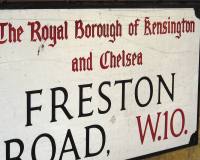
Size: .0028 of a square mile
In the late 70s, a small, derelict section of the Notting Hill region of London gained worldwide attention after it declared its independence from the rest of Britain. The community, which called itself Frestonia thanks to its location on Freston road, was made up of squatters and other counterculture types who had been threatened with eviction by the local city council. Unwilling to abandon their lifestyle, the residents banded together, and after voting overwhelmingly to secede, declared themselves a sovereign nation on Halloween night 1977. They quickly applied for induction into the United Nations, and warned that peacekeeping troops would be needed if the council tried to evict them by force. Because of constant media coverage, the city found it difficult to throw the Frestonians out of their neighborhood, and following a public inquiry the micronation was given the right to exist.
The residents jumped at the opportunity to build their own nation, and soon created their own newspaper, postage stamps, national anthem (three of them, actually), and even a film institute that regularly showed concert footage of the Sex Pistols. The area became a counterculture haven, to the point that in 1982 The Clash even came to the community to record their album Combat Rock. Eventually, though, members of the region negotiated an agreement with the city to help in rebuilding the crumbling district. This meant that Frestonia lost its cherished freedom from the British government, and many of the original citizens moved away. The organization of the little country-within-a-country soon collapsed, but even today the neighborhood remains an unusually close-knit community.
4. Talossa
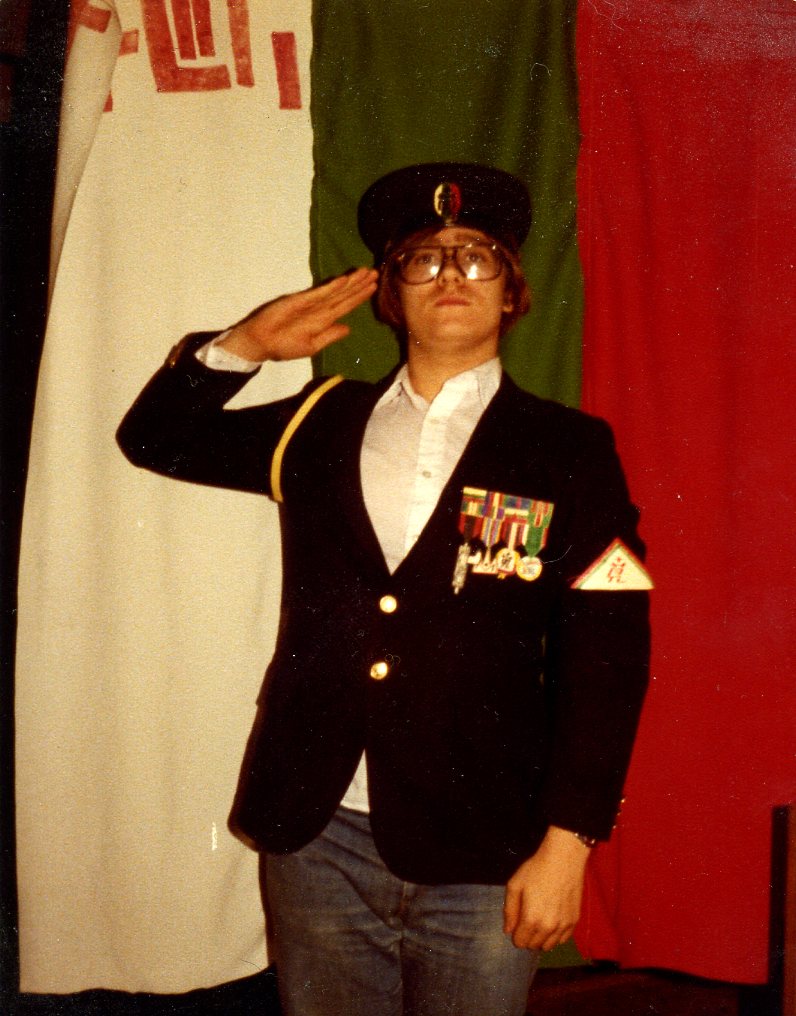
Size: Indeterminate, but includes a good part of Milwaukee, Antarctica, and some French islands
The internet has become a veritable playground for amateur nation builders, as new countries—many of which exist only on paper—can use websites and blogs as a way to build up their populations and drum up support for their cause. There is perhaps no better example of this than Talossa, an upstart country formed in 1979 by then-14-year-old Robert Ben Madison of Milwaukee, Wisconsin. It officially seceded from the United States in the same year (though, as its website states, the U.S. didn’t seem to notice) and established itself as a constitutional monarchy with “King Ben” as its head. In the beginning, Talossa was just a joke hobby (the original “Kingdom” consisted of Madison’s bedroom), but in 1995 Talossa became the first micronation to get a website, and from there its legend and its membership grew rapidly. Soon, it had developed a cult following, and conventions called Talossafests were regularly held in and around Milwaukee.
As micronations go, Talossa features one of the most fully realized cultures. Fans have traced its “history” back to the Berbers, written a national anthem (“Stand Tall, Talossans”) and, most impressively, composed a 25,000-word dictionary of their own invented language, the so-called Talossan Tongue. As one of the world’s oldest micronations (Madison claims to have coined the term), Talossa has become famous the world over, but it has not been without controversy: in 2004, a group of citizens rebelled against the crown and formed the Republic of Talossa, and it seems that a rival Kingdom has also recently sprung up—all only online, of course. Photo: King Robert I (successor to King Ben).
3. Hutt River Province
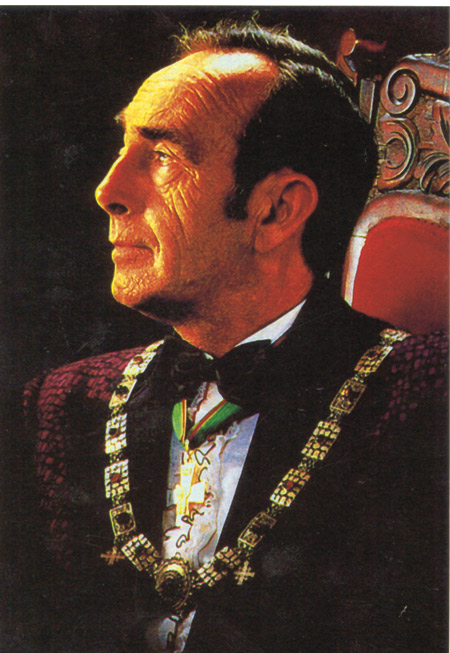
Size: 28.9 square miles
Few micronations ever have any real success at being recognized by the larger countries that they “secede” from, with the notable exception of Australia’s Hutt River Province. Its history dates back to 1970, when Leonard Casley, a farmer from outside of Perth, got into a dispute with government officials over wheat quotas. When no reasonable compromise could be reached, Casley resorted to a loophole in British law and declared that he and his 75 square kilometer property had seceded from the state of Western Australia. A comedy of errors and inaction in the Australian government led to Casley’s claim receiving an uncommon amount of legitimacy, and when he was threatened with prosecution he simply declared himself “His Royal Highness, Prince Leonard of Hutt,” in order to take advantage of ancient law that made monarchs immune to arrest. Since then, the Hutt River Province, or the Principality of Hutt River, as it is now known, has existed in a legal grey area. Residents are not subject to Australian taxes, but the government has still never officially recognized the micronation as a sovereign entity.
Once Hutt River gained its de facto independence, Price Leonard immediately went about the business of drafting a bill of rights, a flag, and a form of money called the Hutt River Dollar. The Principality is still going strong today, and Hutt River has even become something of a tourist destination where visitors can buy Hutt River coins and get their picture taken with the Prince, who is now well into his 80s.
2. Seborga

Size: 4 square miles
The history of Seborga dates back to the 10th century, when the small territory in northern Italy was granted independence and given to some monks so that they could build a monastery. Nearly seven hundred years later it was annexed by the Kingdom of Sardinia, which once owned large parts of Spain and Italy. But even after the end of the Sardinian Kingdom, Seborga was never officially claimed by the Italian state. Things stayed this way for another 200 years until the 1960s, when a local florist named Giorgio Carbone began arguing that the region had never lost its autonomy, and as such was technically an independent principality. Carbone managed to win over the local townspeople, and he was soon elected as the unofficial head of the “country” of Seborga.
Despite its newfound independence, things stayed mostly the same in Seborga until the mid-nineties, when the town’s 300 residents voted to once and for all declare independence from Italy. Carbone, who was already jokingly known as “your tremendousness,” became the official prince of the region, a title he held until his death in 2009. He was the most enthusiastic promoter of the Principality, and is responsible for instituting its flag, money, postage stamps, and motto “sub umbra sede” (which apparently means “Sit in the Shade”). The Italian government has never officially recognized Seborga—residents still pay Italian taxes and attend Italian schools—but they have not discouraged it from symbolically operating as a sovereign state, and today it even has its own standing army, which supposedly consists of a single soldier named Lt. Antonello Lacalo.
1. The Principality of Sealand
Size: .0002 of a square mile
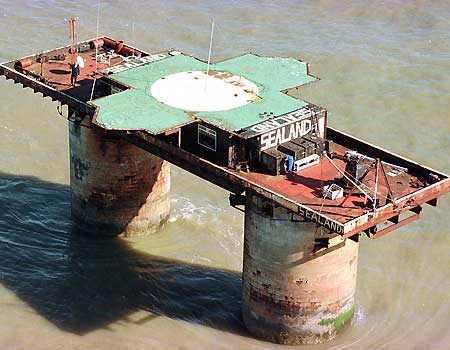
Of all the tiny upstart nations in the world, perhaps none has managed to garner as much fame as the Principality of Sealand, a micronation built on an abandoned WWII sea fort off the coast of Britain. It was started in 1967, when famed pirate radio broadcaster Paddy Roy Bates occupied the platform and began using it as hub for his station “Radio Essex.” Bates began calling the fort “Sealand,” and by 1975 he had come up with a flag, a national anthem, a currency, and even passports. Unlike most micronations, Sealand has gained a remarkably high profile in the international community, if only for its readiness to use force. This was most apparent in 1968, when Bates’s son Michael used a rifle to fire on a British vessel that had entered Sealand’s territorial waters. He was handed a weapons charge, but managed to dodge it in court because Sealand was far enough off the coast that it was outside of British jurisdiction. This decision has been used time and again as proof of Sealand’s sovereignty, but it has yet to be recognized by any major country. Germany did send a representative to the fort during the so-called “Second Sealand Incident” in 1975, when a German citizen briefly claimed the platform before being ousted and imprisoned by the Bates, but it has since denied that this action means it recognizes Sealand as a legitimate nation.
In recent years, Sealand has become less of a country and more of a business venture. During the dot com era, it was briefly used as an offshore data hosting facility because of its lack of laws and regulations. It has also operated as a tourist destination, and in recent years the Bates family even unsuccessfully attempted to sell the Principality for some 750 million euros. Recently, it has been announced that a film about the history of Sealand is in production and is set to come out sometime in 2010.